
Beyond the CPAP: 5 Surprising Truths About Why You’re Actually Tired
This is a subtitle for your new post
It is the great exhaustion paradox of the modern era: you dutifully observe the rituals of "sleep hygiene," optimize your bedroom temperature, and log a full eight hours, yet you wake up feeling as though you’ve spent the night in a battle for survival. For many, this isn't a failure of willpower or a lack of caffeine; it is an evolutionary mismatch.
We are currently witnessing what researchers might call the industrialization of the human face. A craniofacial stagnation where our biological architecture no longer supports our most basic need: breathing. While traditional medicine often treats fatigue with stimulants or lifelong reliance on machines, a new vanguard of airway-centered dentistry suggests the secret to vitality lies not in the pillow but in the structural integrity of the mouth and jaw.
The Autonomic "Red Alert": Why Your Dentist Is the New Sleep Specialist
The front line of sleep medicine has shifted from the overnight lab to the dental chair. Dentists are uniquely positioned to identify the first "clinical artifacts" of a nightly struggle for oxygen.
Consider bruxism, or chronic teeth grinding. While frequently dismissed as a byproduct of daily stress, the technical reality is far more visceral. When your airway collapses during sleep, your autonomic nervous system sounds a "red alert." In a desperate bid to prevent suffocation, the brain signals the jaw to grind and shift forward, physically forcing the airway open to allow for a desperate breath. This nightly battle leaves behind a trail of evidence: worn enamel, fractured teeth, and receding gums.
As
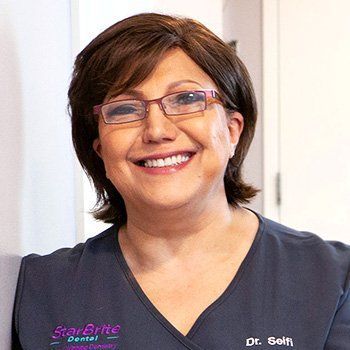
Dr. Maryam Seifi, a Diplomate of the American Sleep and Breathing Academy (D.ASBA), views it, the dentist’s role has evolved from tooth-fixer to life-saver. Her philosophy hinges on treating the patient as an intellectual collaborator: "I believe you, as
my patient, should be included in your dental health... by bringing you to an understanding of the oral situations affecting you and what you can do about it, I make a partner in resolving the situations that are troubling you."
The Developmental Detour: Posture as a Survival Strategy
The structural deficiency of the modern airway is often a developmental detour that begins in infancy. Evolutionary shifts toward softer, processed foods and reduced breastfeeding duration have led to diminished oral muscle stimulation. The result is a shrunken maxilla (upper jaw) and narrow dental arches that lack the cubic volume to house the tongue.
When the jaw is underdeveloped, a domino effect ensues. The tongue, lacking its proper "parking spot" in the roof of the mouth, falls back into the throat, physically obstructing the pharyngeal space. This creates a state of postural desperation. To compensate for a narrow airway, individuals unknowingly develop a "forward head posture" by tilting the neck and jutting the chin to mechanically maximize the diameter of the throat. You aren't just holding your head poorly; your body is tilting its architecture to keep you from choking.
Epigenetic Signaling: Reshaping the Adult Maxilla
For decades, the CPAP (Continuous Positive Airway Pressure) has been the gold standard for sleep apnea. However, the CPAP is a tool of symptom management; it uses pneumatic force to bypass a structural collapse without ever addressing the collapse itself.
The "Wired-style" breakthrough in this field is
Biomimetic Oral Appliances, specifically the Vivos DNA/mRNA system. Rather than just acting as a temporary splint, these devices utilize epigenetic signaling to tell the adult body it is time to grow bone again. By providing natural growth guidance, these appliances encourage the expansion of the maxilla, physically widening the airway and reshaping the mid-face to its intended biological potential.
By correcting this structural architecture, patients can mitigate a cascade of systemic health risks:
- Cardiovascular strain and hypertension
- Type 2 diabetes and metabolic dysfunction
- Cognitive impairment and "mental fogginess"
- Chronic fatigue and immune system depletion
The transition from machine dependence to biological freedom is profound. As patient William P. explains: "They do a really good job of making sure you understand your sleep apnea and what can be done to help you live a CPAP-free life. I have my appliance and I couldn't be happier!"
The Neuro-Developmental Fork: The 7-Year-Old Window
In traditional
orthodontics, the standard procedure is to wait until a child is 13 or 14 before beginnig treatment. From an airway-centric perspective, this is a dangerous delay. It is, quite simply, "way too late."
The sutures of the maxilla remain unfused in early childhood, representing a critical neuro-developmental fork in the road. By intervening when a child is as young as 7 or 8, we can guide jaw expansion while the bone is still developing. Guiding the jaw to its proper width ensures the tongue has sufficient space, preventing the airway from narrowing. Failure to act during this window doesn't just lead to crooked teeth; it sets a child on a trajectory toward a lifetime of behavioral, cognitive, and functional health struggles.
The "Diesel Truck" Warning: The Physiology of Suffocation
There is a dangerous cultural tendency to treat snoring as a domestic nuisance. In reality, a snore that sounds like a "poorly-tuned diesel truck engine" is the sound of an engine struggling to ignite.
It is vital to distinguish between "simple snoring"—the vibration of soft tissue—and obstructive sleep apnea (OSA), where the airway completely shuts down. During an apnea event, breathing can stop for anywhere from 10 seconds to 2 full minutes. Imagine holding your breath for two minutes while your heart rate spikes and your oxygen levels plummet, then doing it dozens of times every single hour. This is the physiological equivalent of a nightly marathon of suffocation.
Because the brain is in a state of hypoxia (oxygen deprivation), self-diagnosis is impossible. True evidence for treatment must come from objective oxygen monitoring. This data allows clinicians to move beyond managing a "noise" and toward treating a life-threatening structural blockage.
The Future of Breathing
The days of viewing exhaustion as a purely chemical or psychological issue are fading. We are entering an era of structural correction where permanent anatomical change is a viable alternative to lifelong symptom management.
If you are haunted by "mysterious" health issues, unrelenting headaches, irritability, or the fog of chronic fatigue, it is time to look past the symptoms. The architecture of your airway may be the hidden blueprint for your health. The mandate for the modern patient is simple but transformative:
Frequently Asked Questions
1. Why am I still tired even if I sleep 8 hours?
Chronic fatigue despite a full night of sleep is often linked to airway obstruction, not insomnia. When the airway narrows or collapses during sleep, oxygen levels drop repeatedly, forcing the body into a stress response. This prevents deep, restorative sleep.
At StarBrite Dental, Dr. Seifi D.D.S evaluates the structural integrity of your jaw and airway to determine whether anatomical restriction is contributing to your exhaustion. Our Rockville office, located at 5936 Hubbard Dr, Rockville, MD 20852, focuses on identifying and correcting the root cause, not just masking symptoms.
To schedule an airway consultation, call (301) 433-7357.
2. How is airway-centered dentistry different from CPAP therapy?
CPAP machines manage symptoms by forcing air into the airway each night. While effective for oxygen support, they do not correct the structural cause of airway collapse.
At StarBrite Dental in Rockville, Dr. Seifi D.D.S utilizes biomimetic oral appliance therapy designed to encourage natural jaw expansion. Instead of lifelong machine dependence, this approach aims to widen the airway structurally and improve breathing long-term.
Our goal is biological correction, not indefinite symptom management.
3. Can teeth grinding be related to sleep apnea?
Yes. Bruxism (teeth grinding) is often a protective reflex triggered by airway obstruction. When oxygen levels drop during sleep, the nervous system signals the jaw to shift forward in an attempt to reopen the airway.
Dr. Seifi frequently identifies worn enamel, fractured teeth, and gum recession as early warning signs of sleep-disordered breathing. A comprehensive evaluation at StarBrite Dental can determine whether grinding is linked to airway collapse.
Early diagnosis can prevent further dental damage and improve systemic health.
4. Is airway treatment available for children in Rockville?
Absolutely. Early intervention is critical.
The upper jaw (maxilla) remains developmentally flexible in children as young as 7 or 8. Guiding proper jaw expansion during this window can prevent airway narrowing, behavioral issues related to poor sleep, and future obstructive sleep apnea.
At StarBrite Dental, Dr. Seifi D.D.S evaluates pediatric airway development and focuses on growth guidance rather than delayed orthodontic extraction. Preventive structural care can reduce the risk of lifelong breathing challenges.
Parents in Rockville seeking early airway screening can contact our office at (301) 433-7357.
5. How do I know if my snoring is serious?
Occasional light snoring may be benign. However, loud snoring that sounds strained or interrupted by gasping may indicate obstructive sleep apnea (OSA), a condition where breathing temporarily stops during sleep.
Because oxygen deprivation affects brain function, self-diagnosis is unreliable. Objective monitoring and structural assessment are essential.
At StarBrite Dental, we utilize comprehensive airway evaluations to determine whether your snoring is a sign of a structural airway blockage. If you live in or near Rockville, MD, we invite you to visit us at 5936 Hubbard Dr, Rockville, MD 20852 for a professional assessment.