

Before You Agree to Jaw Surgery or a Permanent Bite Adjustment
Researched and written by the StarBrite Dental content team.
Clinically reviewed by Dr. Joanne Ledoux, DMD
| Associate, StarBrite Dental.
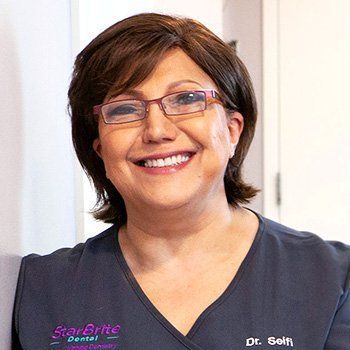
Published under the editorial oversight of Dr. Maryam Seifi, DDS
| Founder & Senior Dentist.
Someone has shown you a plan. It may involve a surgeon and a recovery you have started rearranging your life around. It may involve reshaping your teeth or moving them to change how your bite comes together.
Either one can be the right answer, and anyone who tells you surgery is never necessary for a jaw joint is selling you something.
This page exists because both decisions are permanent, and because for some patients a different question was never asked.
Once enamel is ground away to adjust a bite, it does not grow back. Once a joint has been operated on, that is the joint you have. There is no version of either where you get to see how it goes and change your mind.
The Question That Often Goes Unasked
Has conservative care actually been tried, or has it only been mentioned?
Those sound like the same thing, and they are not. A night guard that did not work is not a trial of conservative care for a jaw joint, because a night guard protects teeth from grinding wear rather than treating the joint. If that is all that has been tried, the reversible options have not been exhausted. They have barely been started.
Most TMJ disorders are not relentlessly progressive. Symptoms commonly fluctuate, and many people improve substantially with care that can be stopped at any point without leaving a trace. That is the entire reason the bar for anything permanent should be set high.
The National Institutes of Health has recommended that patients stay away from irreversible TMJ surgery, and the ordinary path is conservative care first, with surgery considered only when that path has genuinely been worked through.
What a Real TMJ Second Opinion Includes
Take these points with you. Any competent clinician will answer them without defensiveness. In fact, a defensive answer is itself information.
- Has the joint actually been examined and measured, or was the diagnosis made from the symptoms alone? This includes: opening measured rather than estimated, deviation on opening, joint sounds, and palpation of the jaw, temple, and neck muscles.
- Has there been imaging that shows the bony condition of the joint? A CBCT shows it. A panoramic X-ray and a set of impressions do not.
- Which conservative treatments have actually been tried, for how long, and what happened? Examples include: self-care and load reduction, physical therapy, a stabilization splint rather than a night guard.
- What specifically makes me a candidate for this procedure? Not what makes the procedure good in general.
- What happens if I do nothing? There is often a legitimate answer here, and you are entitled to hear it.
Anything less is not a second opinion. It is a confirmation of the first one.
What We Would Actually Do
We would examine the joint, take an image of it, and tell you what we found.
Sometimes that means conservative care has not been properly tried and there is still real ground to cover. Sometimes it means the plan you already have is the right one, in which case you proceed with more confidence than you have now. Sometimes the honest answer is that nothing needs treating.
We treat TMJ with splint therapy here. We refer out for Botox and for surgical management and for cases that need a residency-trained orofacial pain specialist. TMJ is not a recognized dental specialty, and we do not call ourselves TMJ specialists.
We are also not going to tell you your surgeon is wrong. We are going to tell you what your own joint shows, and you can take that back to whoever you like.
The Honest Limits of a Second Opinion
We will not have your full history, your surgeon's reasoning, or the years of context behind the plan you were given. A second opinion is one more input, not a verdict, and it should not settle anything on its own.
What it can do is tell you whether a question was skipped that is worth knowing before something permanent.
For the full picture of what goes wrong in this joint and what the treatment options honestly are, read our complete guide to why TMJ pain doesn't go away.
If you are in Rockville, Montgomery County, or the broader Washington D.C. area and you are facing this decision, schedule a second opinion before you consent. It is a single appointment. What it tells you is permanent either way.